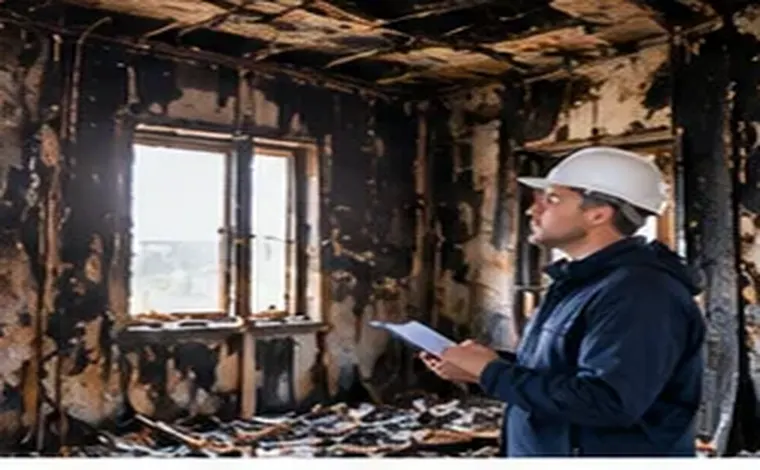
The first 72 hours
Once it is safe and the fire service allows access, notify your insurer or broker and ask what emergency assistance is available, such as emergency payments, temporary accommodation and site security. Do not start demolition or throw away damaged items without the insurer's agreement, except where needed for safety; photograph and list everything first.
If the fire is large, the insurer will usually appoint a loss adjuster. After bushfires affecting many homes, insurers often set up dedicated teams and on-site hubs. Either way, ask who is handling your claim and get their contact details in writing.
What an independent assessor does on a fire claim
Your assessor acts only for you. They review the policy, sum insured and optional extras, inspect the site, coordinate any specialist reports, and prepare a full claim covering building, contents and additional costs. They then deal with the insurer's adjuster and builder, challenge undervalued items and keep the claim moving.
Many assessors also help you decide between rebuilding and accepting a cash settlement, a decision with long-term consequences, particularly in bushfire-prone areas where new construction standards may raise costs.
Assessors also help with the practical sequencing of a claim: securing emergency payments early, making sure temporary accommodation is extended when rebuilding takes longer, and coordinating with architects, certifiers and councils so that design and approval costs are recognised. On a total loss, this coordination often saves months.
Rebuild cost and the sum insured
The most contentious issue after a total loss is often whether the sum insured is enough to rebuild. Building to the bushfire attack level required for your site, demolition and debris removal, site works, professional fees and price rises after a disaster can all push costs beyond expectations. Some policies offer a safety net above the sum insured, others do not. A quantity surveyor or experienced builder can produce an independent rebuild estimate to compare with the insurer's figures.
Contents: the long list
Contents claims after a fire require patience. Insurers usually accept that not everything can be proven by receipts, but they expect a reasonable inventory with descriptions, ages and replacement values. Photos and videos of rooms, bank and card statements, online order histories and manuals help reconstruct what was lost.
Check whether your policy pays new-for-old or applies depreciation for certain items, and whether sub-limits apply to jewellery, art, collections or tools of trade.
- Work room by room, including sheds, garages and roof spaces
- Use online accounts to retrieve purchase records
- Ask family for photos taken in your home
- Note specified items listed on your schedule
Smoke, soot and partial damage
For partial fires, disputes often concern cleaning versus replacement. Smoke odour can persist in insulation, carpets and soft furnishings, and soot can damage electronics. Ask for specialist cleaning results and, where items are not restored to their prior condition, request replacement. Hygienist or restoration reports can be decisive evidence.
Heat damage is a further trap. Windows, plastic fittings, electrical wiring and roof structures near the fire may be weakened without visible charring. Ask for an electrician's safety inspection and, if any doubt exists about the structure, an engineer's assessment before repairs are scoped. These reports can change a partial repair into a much larger claim.
When the insurer questions the cause
In some cases the insurer investigates the origin of the fire, especially if the cause is unclear or if a business was in difficulty. Cooperate fully, answer questions accurately and keep copies of what you provide. If the investigation becomes adversarial, seek legal advice early. Your assessor can arrange an independent fire investigator if the insurer's conclusions seem doubtful.
Complaints and external review
If you disagree with a decision, raise a formal complaint with the insurer and ask for its final response in writing. You can then take the matter to the Australian Financial Complaints Authority, which is free for consumers and eligible small businesses. AFCA can consider independent rebuild estimates, contents valuations and expert reports from both sides.
Following major bushfires, government recovery agencies and community legal centres have often provided additional support to policyholders. It is worth checking what assistance is available locally.
Timeframes and patience
Simple fire claims may be settled within months, while total losses and catastrophe events can take much longer because of design, permits and builder availability. Keep temporary accommodation entitlements under review and ask for extensions in writing before they run out.
Keep a single file, paper or digital, with every report, quote, email and decision. When a claim runs for many months, staff at the insurer may change, and a well-organised record is the easiest way to keep the claim on track and to support any later complaint.
Organisations offering this service
- Australasian Institute of Chartered Loss Adjusters (AICLA): Professional institute representing loss adjusters across Australia and New Zealand, with qualified members and dedicated training for the profession.
- Australian Financial Complaints Authority (AFCA): Independent and free Australian external dispute resolution body handling consumer complaints against insurers, including disputes over declined or delayed insurance claims.
- Expert Witness Institute - Medical expert witness services: Page of the UK expert witness institute dedicated to medical expert witness services, aimed at clinicians acting as experts in legal cases.
- La Médiation de l'Assurance: Mediation service for the French insurance sector, publishing a mediator charter and an annual activity report on its handling of disputes.
External links provided for information only; check the terms directly with each organisation.
Frequently asked questions
Should I accept the insurer's cash settlement after a total loss?
Only once you are confident it covers the real cost of rebuilding to current standards on your site, or you have decided not to rebuild. An independent estimate helps you make that decision.
Can I appoint an assessor after the insurer's adjuster has visited?
Yes. You can engage your own assessor at any stage. Inform the insurer in writing and share their contact details.
How do I prove contents that burned?
Use photos, bank records, online purchase histories and a detailed list with approximate ages and values. Insurers generally assess contents claims on reasonableness when receipts are unavailable.
Are bushfire construction requirements covered?
Many policies cover the extra cost of meeting building regulations during reconstruction, often with limits. Check your policy and include these costs in your rebuild estimate.
A fire claim is both technical and emotional. Clear evidence, a realistic rebuild estimate and, where needed, an assessor working solely for you give you the strongest footing with the insurer.