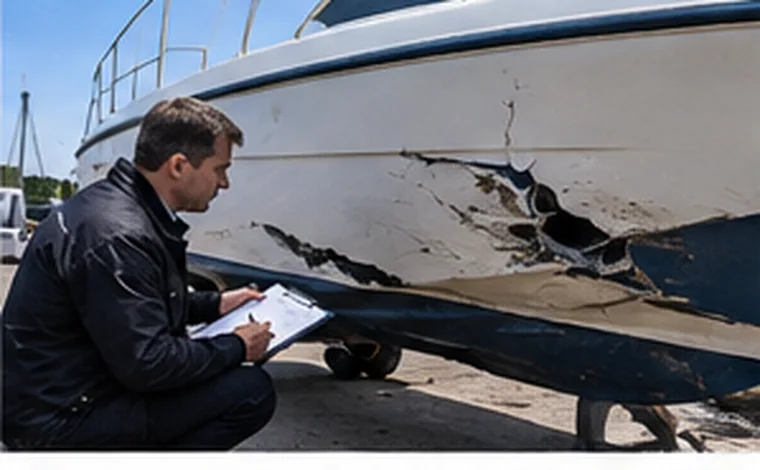
The framework of hull and machinery cover
Commercial vessels are typically insured under hull and machinery policies, often based on English law clauses such as the Institute Time Clauses or the Nordic Marine Insurance Plan, alongside protection and indemnity cover from a P&I club for third-party liabilities. The hull policy responds to physical damage to the ship; the club deals with liabilities such as cargo claims, pollution and crew injury.
Important features include the agreed value, the deductible per accident, the treatment of machinery damage caused by negligence or latent defect, and conditions linked to classification and the ship's seaworthiness. A loss that looks straightforward can become contentious on any of these points.
Classification and survey after a casualty
After a casualty, the classification society inspects to decide whether the ship keeps its class and what repairs are required, sometimes imposing a condition of class. In parallel, underwriters appoint a hull surveyor to assess the cause, the damage attributable to the event and the reasonable cost of repairs. The two inspections serve different purposes and should not be confused.
The course of a hull claim
The owner notifies underwriters through its broker, arranges the underwriters' surveyor's attendance and usually invites tenders from repair yards. Underwriters may comment on the choice of yard and the repair specification. Once repairs are complete, the owner's claim is often prepared by an average adjuster, who allocates costs between owners, hull underwriters and other parties.
Large casualties may also trigger salvage services, a general average declaration and investigations by the flag state or coastal authorities. Each strand generates its own documents and deadlines.
Timing matters as much as paperwork. Underwriters expect prompt notice, and they should be given a genuine opportunity to attend before damaged parts are discarded or the ship sails after temporary repairs. If the owner proceeds without them, it may later struggle to prove the extent of damage or the necessity of particular works, even where the casualty itself is not in doubt.
- Deck and engine logbooks, voyage data recorder output and course records
- Master's statement and crew reports
- Classification society survey reports and conditions of class
- Maintenance records, planned maintenance system history and spare parts logs
- Repair tenders, yard invoices and specification of works
- Correspondence with salvors, agents and authorities
Allocating cost between event and existing condition
Repairs in drydock often combine casualty damage with routine maintenance carried out at the same time. Dock dues, gas freeing, towage and general services must then be apportioned between the claim and the owner's own account. These allocations, together with the treatment of wastage, corrosion and pre-existing defects, are classic areas of debate.
Machinery damage raises its own issues: whether a crankshaft failure was caused by a crew error, a latent defect or wear, and whether the policy applies a special machinery deductible or excludes the defective part itself.
Detailed yard invoices that separate each job, with references to the specification and survey items, make apportionment far easier. Vague lump sums invite deductions, because the adjuster cannot verify which work relates to the casualty.
Collision and recovery from other parties
When two ships collide, hull underwriters commonly cover the owner's own damage and, under many English law clauses, a share of the liability to the other ship, with the balance falling to the P&I club. Liability is usually apportioned according to the degree of fault of each vessel, which depends on navigation evidence, radar and AIS data and witness accounts.
Recoveries from the other ship's interests, from repairers whose earlier work was faulty or from equipment manufacturers can reduce the net cost to underwriters and to the owner's deductible. Preserving evidence and complying with notice periods in contracts and conventions is therefore just as important as documenting the physical damage.
Points of friction with underwriters
Disputes typically concern the cause of damage, the reasonableness of the yard chosen, temporary versus permanent repairs, deviation and repair-related voyage costs, and whether the incident was one event or several. Questions about crew competence or the ship's condition can also lead to coverage defences.
General average and salvage
When extraordinary sacrifices or expenses are made for the common safety of ship and cargo, the owner may declare general average. An average adjuster then prepares a statement, usually under the York-Antwerp Rules, apportioning contributions between ship, cargo and freight interests. Hull underwriters cover the ship's proportion, subject to the policy.
General average and salvage can take years to settle and involve many cargo interests, so careful document management from the first day is essential.
Why some owners appoint their own expert
Larger shipowners have technical superintendents and claims departments, but smaller operators may lack the resources to manage a complex casualty. An independent marine surveyor or consultant acting for the owner can attend surveys, challenge cause assessments, review apportionment of yard costs and work with the average adjuster to make sure nothing is left out.
The appointment is most justified when cause or cover is disputed, when costs are large or when the owner's team is stretched. A competent adviser will be clear about what depends on the policy wording and what is genuinely open to negotiation.
Organisations offering this service
- International Institute of Marine Surveying (IIMS): International professional institute for marine surveyors, operating regional websites and publishing regular news bulletins for its members worldwide.
- International Institute of Marine Surveying (IIMS): International professional body for marine surveyors, providing training, accreditation and a worldwide network of member surveyors organised by region.
- W K Webster & Co: UK-based group specialising in marine and transport claims, offering claims handling, surveying coordination and recovery services.
- Chartered Institute of Loss Adjusters (CILA): Chartered UK professional body for claims and loss adjusting professionals, responsible for training, qualifications and standards across the claims profession.
External links provided for information only; check the terms directly with each organisation.
Frequently asked questions
What does an average adjuster do?
An average adjuster prepares the formal statement of a marine claim or general average, allocating costs between the parties according to the policy and the applicable rules.
Is the class surveyor working for the insurer?
No. The classification society checks the ship's compliance with class rules. The insurer's surveyor is a separate appointment focused on cause and cost.
Can the insurer choose the repair yard?
The owner usually chooses, but underwriters may require tenders and can limit their contribution if a more expensive yard is used without good reason, depending on the clauses.
Are routine maintenance costs during repairs covered?
No. Owner's work done in the same drydock is for the owner's account, and shared costs are apportioned.
Marine losses depend on accurate records, sound technical analysis and careful cost allocation. Specialist representation for the owner helps when cause, cover or repair costs are contested.